

The Skunky Science: Why Does Weed Smell Like a Skunk?
From the aromatic alleyways of Amsterdam to the fragrant farms of Northern California, the world of cannabis presents a symphony of scents. Among the myriad of aromas, one stands tall: the unmistakable, pungent, skunky scent. This aroma, while divisive, is undeniably iconic in the cannabis community. But what’s behind this powerful punch to the nostrils? Let’s embark on a sensory journey into the world of Volatile Sulfur Compounds (VSCs) and cannabis.
Volatile Sulfur Compounds are organic molecules characterized by the presence of sulfur. Their “volatile” nature means they have a knack for evaporating quickly, making them airborne and detectable by our olfactory systems. Sulfur compounds are notorious in the world of chemistry for their strong, often pungent aromas. From the sharp scent of rotten eggs to the savory aroma of cooked onions, VSCs are the masterminds.
In the human body, VSCs are intriguing. While typically harmless in the trace amounts found in foods and plants, they can be irritants in larger concentrations. For instance, hydrogen sulfide, responsible for the rotten egg smell, can be harmful in high amounts. However, the VSCs in cannabis are present in benign quantities, more responsible for sensory experiences than any toxicity.
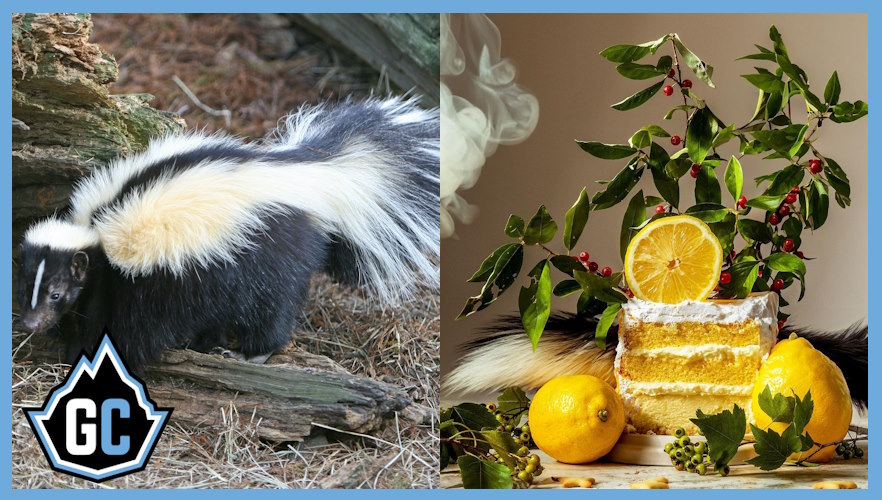
The skunky aroma of certain cannabis strains isn’t just a poetic descriptor. Both skunks and some strains of cannabis owe their powerful scent to a VSC named 3-Methyl-2-butene-1-thiol. This molecule, while a bane for those sprayed by a skunk, is a delight for cannabis enthusiasts who savor that classic skunky aroma.
3-Methyl-2-butene-1-thiol
Cannabis is a botanical marvel, producing a plethora of aromatic compounds. While terpenes often get the spotlight, VSCs are the silent contributors to the skunky scent:
VSCs are ubiquitous in nature, playing pivotal roles in the aromas of many foods. Garlic owes its sharp scent to allicin, a sulfur compound. Onions, leeks, and chives, members of the Allium family, are rich in VSCs, giving them their characteristic flavors and smells. Cruciferous veggies, like broccoli and Brussels sprouts, release VSCs when cooked, often leading to love-hate relationships with diners.
In the culinary world, VSCs are both celebrated and cursed. Chefs use them to impart deep flavors to dishes, but they’re also the culprits behind some of the more “challenging” food aromas. In the body, compounds like those found in garlic are believed to offer health benefits, from antioxidant properties to cardiovascular health boosts.
BRIDGING THE AROMATIC WORLDS OF WINE AND CANNABIS
While cannabis enthusiasts are familiar with the skunky aroma, wine aficionados have their own relationship with Volatile Sulfur Compounds (VSCs). These compounds have been extensively studied in the context of wine, especially in red Bordeaux wines, where they play a significant role in the wine’s aging bouquet. But how does this relate to cannabis?
In wines, the involvement of these volatile sulfur compounds in the pleasant truffle, toasty, and smoky aromas of aged fine wines is well-established. Their aromatic descriptors often overlap with the main characteristics of the olfactory representation of the aging bouquet concept. In cannabis, the presence of VSCs and their interaction with terpenes could be responsible for the unique aromatic profiles of different strains, especially as they age or cure.
Cannabis, with its millenia old connection with humanity and diverse genetics, yields truly a massive trove of sensory experiences, and ‘skunk-esque’ is just one of the millions of results in an endless combination of aromatics. The skunky aroma, while polarizing, is a testament to the plant’s chemical complexity and the intricate dance of compounds at play. As the world of cannabis research expands, each aroma, flavor, and effect offers a deeper understanding of this remarkable plant. Whether you’re a casual consumer or a cannabis connoisseur, there’s always something new to discover in the ever-evolving world of cannabis aromas.
Now, did someone run over a skunk!?
— Magic Plants (Joe)
#TeamGlacier
References:
The Skunky Science: Why Does Weed Smell Like a Skunk?
From the aromatic alleyways of Amsterdam to the fragrant farms of Northern California, the world of cannabis presents a symphony of scents. Among the myriad of aromas, one stands tall: the unmistakable, pungent, skunky scent. This aroma, while divisive, is undeniably iconic in the cannabis community. But what’s behind this powerful punch to the nostrils? Let’s embark on a sensory journey into the world of Volatile Sulfur Compounds (VSCs) and cannabis.
Volatile Sulfur Compounds are organic molecules characterized by the presence of sulfur. Their “volatile” nature means they have a knack for evaporating quickly, making them airborne and detectable by our olfactory systems. Sulfur compounds are notorious in the world of chemistry for their strong, often pungent aromas. From the sharp scent of rotten eggs to the savory aroma of cooked onions, VSCs are the masterminds.
In the human body, VSCs are intriguing. While typically harmless in the trace amounts found in foods and plants, they can be irritants in larger concentrations. For instance, hydrogen sulfide, responsible for the rotten egg smell, can be harmful in high amounts. However, the VSCs in cannabis are present in benign quantities, more responsible for sensory experiences than any toxicity.
The skunky aroma of certain cannabis strains isn’t just a poetic descriptor. Both skunks and some strains of cannabis owe their powerful scent to a VSC named 3-Methyl-2-butene-1-thiol. This molecule, while a bane for those sprayed by a skunk, is a delight for cannabis enthusiasts who savor that classic skunky aroma.
3-Methyl-2-butene-1-thiol
Cannabis is a botanical marvel, producing a plethora of aromatic compounds. While terpenes often get the spotlight, VSCs are the silent contributors to the skunky scent:
VSCs are ubiquitous in nature, playing pivotal roles in the aromas of many foods. Garlic owes its sharp scent to allicin, a sulfur compound. Onions, leeks, and chives, members of the Allium family, are rich in VSCs, giving them their characteristic flavors and smells. Cruciferous veggies, like broccoli and Brussels sprouts, release VSCs when cooked, often leading to love-hate relationships with diners.
In the culinary world, VSCs are both celebrated and cursed. Chefs use them to impart deep flavors to dishes, but they’re also the culprits behind some of the more “challenging” food aromas. In the body, compounds like those found in garlic are believed to offer health benefits, from antioxidant properties to cardiovascular health boosts.
BRIDGING THE AROMATIC WORLDS OF WINE AND CANNABIS
While cannabis enthusiasts are familiar with the skunky aroma, wine aficionados have their own relationship with Volatile Sulfur Compounds (VSCs). These compounds have been extensively studied in the context of wine, especially in red Bordeaux wines, where they play a significant role in the wine’s aging bouquet. But how does this relate to cannabis?
In wines, the involvement of these volatile sulfur compounds in the pleasant truffle, toasty, and smoky aromas of aged fine wines is well-established. Their aromatic descriptors often overlap with the main characteristics of the olfactory representation of the aging bouquet concept. In cannabis, the presence of VSCs and their interaction with terpenes could be responsible for the unique aromatic profiles of different strains, especially as they age or cure.
Cannabis, with its millenia old connection with humanity and diverse genetics, yields truly a massive trove of sensory experiences, and ‘skunk-esque’ is just one of the millions of results in an endless combination of aromatics. The skunky aroma, while polarizing, is a testament to the plant’s chemical complexity and the intricate dance of compounds at play. As the world of cannabis research expands, each aroma, flavor, and effect offers a deeper understanding of this remarkable plant. Whether you’re a casual consumer or a cannabis connoisseur, there’s always something new to discover in the ever-evolving world of cannabis aromas.
Now, did someone run over a skunk!?
— Magic Plants (Joe)
#TeamGlacier
References: